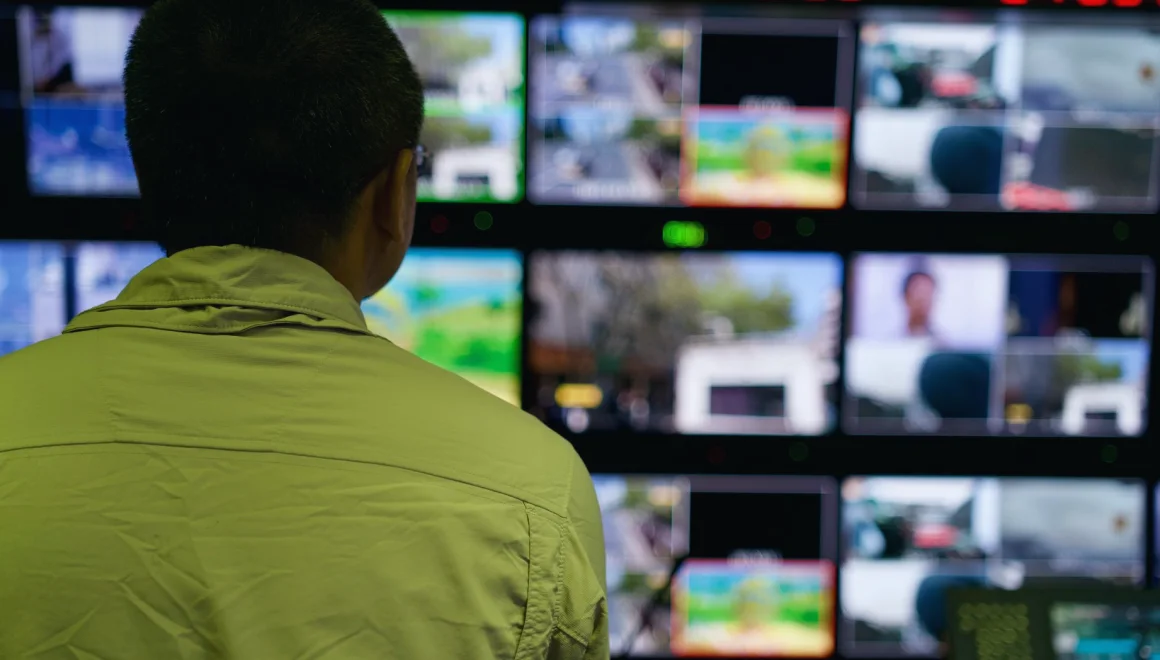
Why one number is never the whole answer
People often ask us for a single price for a control room, and the honest reply is that a gallery is closer to a small building project than to a piece of equipment. A room that will switch four cameras for a village hall is a different job from one that must take a dozen feeds, feed an online stream and sit beside a stage in a working theatre.
What we can do is show you where the money goes. A fit-out is made of a few clear parts: the survey and plan, the equipment itself, the cabling and routing, the furniture and room work, the installation days, and the testing and handover. Each part can be priced separately in a written quotation.
That separation matters because it lets you change one part without unpicking the rest. If the budget is tight, you can choose to phase the monitor wall or reuse existing cameras, and the quotation shows exactly what that does to the total.
The room and the survey come first
Before any kit is chosen, Daniel visits the space. He measures the room, checks power, ventilation, cable routes and how far the gallery sits from the stage or camera positions. A cramped store room, a converted office and a purpose-built booth each carry different costs, and the survey is where those differences become visible.
Heat is a good example. A monitor wall and a rack of switching gear give off real warmth, and a small windowless room can need extra cooling or quieter fans so that audio is not spoiled. Noise from the room into the venue is another point we check early.
The survey and written plan are part of the price, and they are the cheapest place to find a problem. A cable run that turns out to be impossible costs very little to discover on paper and a great deal to discover on installation day.
- Room size, ceiling height and access for equipment
- Power supply and ventilation or cooling needs
- Distance and route for camera and network cabling
Monitor walls, switchers and the choices behind them
The largest single block of cost is usually the equipment: the vision switcher, the monitors, the routing hardware and the intercom. Here the main driver is how many sources the room must handle and how many outputs it must send. A switcher for four inputs and one programme feed costs far less than one built for sixteen inputs with several outputs.
Monitor count follows the same logic. A single large display with a multiviewer is cheaper and tidier than a wall of separate screens, though a bigger wall gives the director more to look at without squinting. We talk through what your crew will actually watch.
We also separate what must be new from what can be reused. Good cameras, tripods or an existing switcher may still serve you well, and keeping them can lower the figure considerably without lowering the quality of the picture.
- Number of camera inputs and programme outputs
- One multiviewer display or a wall of separate monitors
- New equipment compared with reusing what you own
Intercom, cabling and signal routing
The parts nobody photographs are often the parts that decide whether a gallery feels calm. Intercom lets the director talk to camera operators and the stage manager, and a clear, reliable system saves more stress than any expensive monitor. The number of stations and whether they are wired or wireless changes the price.
Cabling is priced by length and by how difficult the route is. Running fibre or network cable through a finished building, across a balcony or under a stage takes more labour than running it across an open floor. Labelling and neat dressing add time but save a great deal at the first fault.
Signal routing lets you send any source to any destination without re-plugging. A simple setup needs little of it, while a room that serves a screen, a stream and a recording at once benefits from a proper routing layer, and that is reflected in the cost.
Installation days, testing and handover
Labour is the part people underestimate. Installing a compact gallery usually takes several days on site, depending on cable routes and how much of the room needs work. If the venue is in use during the week, we may have to install in short evening sessions, which stretches the schedule and the price.
Testing is not an extra we add if there is time. We run every camera, every audio path and the intercom, and we run a full mock show before leaving. Daniel then walks your crew through the room so that they can operate it without us.
Travel counts too. We are based in Dorchester and work across the south of England, so a nearby venue costs less in travel and accommodation than one further afield, and the quotation lists those items plainly.
- Number of on-site days and access hours
- Out-of-hours or phased working
- Travel for sites away from Dorchester
How to keep a fit-out within budget
The most useful thing you can do is tell us how the room will be used. Describe the shows, the number of cameras, who will operate it and whether you plan to stream. A clear description lets us price what you need rather than what a larger room might want.
Decide early what can wait. Extra inputs, a bigger monitor wall or additional intercom stations can often be added later if the cabling is prepared now, which spreads the cost without a rebuild. We will point out where leaving room to grow is cheap and where it is wasteful.
Ordering follows our usual route: an enquiry through the contact page, a written quotation, then an invoice paid by bank transfer. Our Prices page shows the starting figures for each service, and the quotation confirms exactly what is included.
A control room fit-out is priced by room, equipment, cabling, labour and testing, and each of those can be explained and adjusted. If you send us a few details about your venue and how you want to work, Priya will reply with questions and a written quotation. Nothing is fixed until you have read it and agreed, and you will always see where each pound goes.