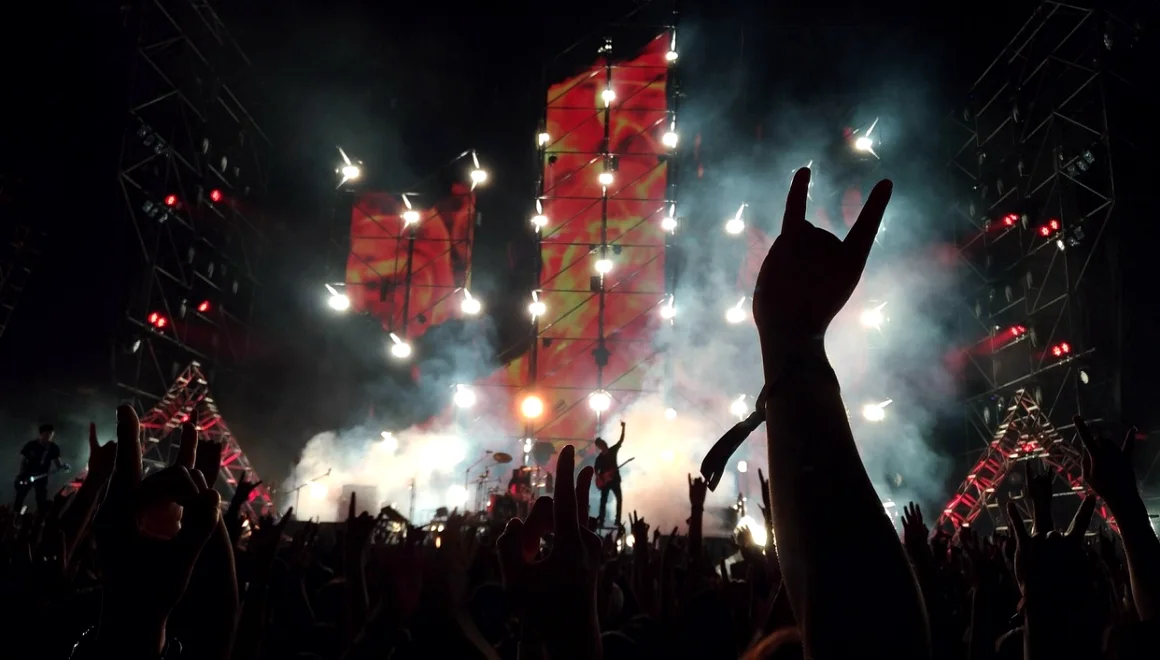
Two ways to cover the same stage
Organisers usually ask us for coverage in one sentence, and the sentence hides a real choice. Either the show is recorded and delivered afterwards, or it is relayed live to screens, a stream or a broadcaster. The cameras, the lenses and the operators can be identical. What changes is the mobile control desk, the way the signal leaves the site and how much room there is for a mistake.
This article compares those two options for a music event, and I will say plainly which one I recommend for most bookings. I am Priya Nair, the production manager, and I plan the crews and kit behind both. Autumn is a good moment to write it, because enquiries for next season's outdoor dates tend to arrive in these weeks, when the previous summer's lessons are still fresh.
What recording for later involves
A recorded show is captured on camera and on the desk at the same time. The technical director cuts between cameras as the set runs, and we also keep the individual camera files, so an editor can rebuild any moment afterwards. If a singer's mic drops for thirty seconds or a camera goes soft, the problem can often be repaired in the edit rather than being seen by an audience.
That safety net is the great strength of recording. It also lets you take your time over the finished film, add titles, balance the sound and release highlights over several weeks. The cost is that nothing reaches viewers during the event, so a venue wanting screens inside the site will need something different.
- Individual camera files kept alongside the cut
- Mistakes can be corrected in the edit
- Delivery after the event, on an agreed date
What relaying live involves
A live relay sends the cut programme out as it happens, to screens around a field, to a stream online or to a broadcaster's feed. The technical director's decisions are final, because viewers see them immediately. That calls for a firm script, clear calls from the director and a tested route for the signal, with a second route ready if the first fails.
The upside is the atmosphere. Crowds at the back of a large site watch the stage on screens, and people at home join in while the set is still going. The demands are higher: more checking before doors open, a monitored connection throughout and a crew that has rehearsed the running order. Graphics and audio also need an operator, since nobody can fix them later.
- Programme leaves the site in real time
- Needs a tested primary and backup signal route
- Audio and graphics must be right first time
Cost, risk and crew side by side
Recording is generally the lighter commitment. It needs fewer people tied to the signal path, no live connection to protect and a looser schedule on the day. A relay adds an engineer to watch the link, an operator for graphics and often an extra rehearsal slot, so the crew list is longer and the quotation reflects it.
Risk sits in different places. With a recording, the worst case is usually a repair job in post-production. With a relay, a dropped link is visible to everyone at once. Weather matters for both, but a wet cable run or a gusty mast is far more serious when thousands of people are watching a screen. We cover this in the written quotation so nothing is left to assumption.
Which option I would recommend
For most music events I recommend recording first, with a live relay added only where there is a clear reason for it. A reason means a sold-out crowd who cannot see the stage, a sponsor or partner expecting a live audience or a broadcaster with a fixed slot. Without one, a recorded show gives you a better finished product and a calmer day for everyone, including the artists.
If you do need a relay, I suggest also recording the full set on the same desk. Then you have the live moment and a clean copy afterwards, and the second is cheap to add once the crew and cameras are already in place. That combination is the one I have seen cause the fewest regrets.
What to prepare before you ask
A short list makes the first conversation far quicker. Tell us the venue, the date, the number of stages and the running order, along with what you want viewers to see and where. If a relay is wanted, say whether the site has a wired connection or whether we should plan our own route, and who is responsible for permissions with the venue.
We will then reply with a written quotation that states the crew, the kit and what is and is not included. Nothing is booked until you confirm it in writing. If you are unsure which option fits, say so in the enquiry and describe the audience you have in mind; that usually settles the question without further debate.
Recording gives you room to correct and polish, while a live relay gives you immediacy at the price of less margin. My advice is to record by default and relay only when a real audience needs it, ideally doing both from the same desk. If you are weighing it up for next season, send us the venue, the running order and your audience, and we will set out both versions in writing.